Editorial May 7, 2026 · 4 min read
The hidden cost of "free online" — ads, signups, file harvesting
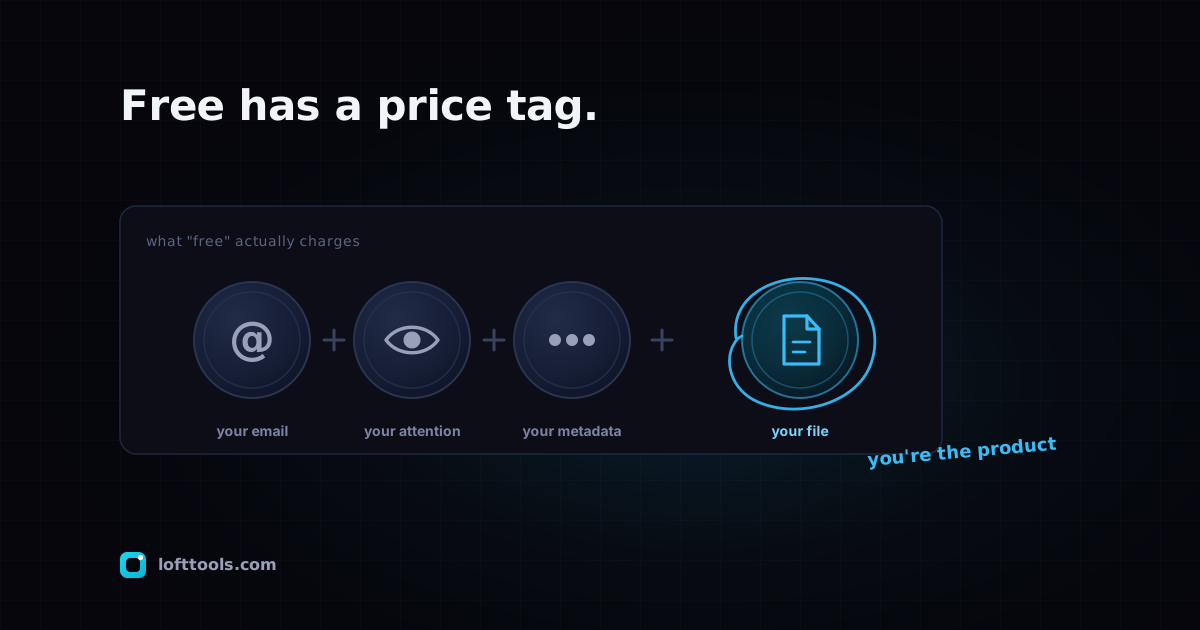
A "free online" PDF tool is rarely free of cost. The cost just gets paid in a different currency: your email, your attention, your file metadata, sometimes your file. Here is the catalogue of currencies operators accept, and what to watch for.
By Khine 828 words Extractable lead
When a website processes a file for you on its servers, somebody is
paying for the compute, the storage, the bandwidth, the engineers
who keep it running, and the cost of any liability that attaches to
the operation. If the user isn’t paying, it is worth asking who is.
The answer, almost always, is the user. The transaction just looks
different from a credit-card transaction.
There are four currencies “free online” tools tend to accept. None
of them is illegitimate. All of them are real money flowing from
the user to the operator, and the user usually isn’t told what
they’re handing over.
The first is your email. The operator asks for it before the second
operation, before the result is delivered, before the file can be
saved — wherever the friction is highest. Once collected, an email
is a marketing channel, a join key against any other database that
has it, an asset that can be sold or licensed depending on the
policy, and a nudge into upgrading. Nothing about that is hidden in
the strict sense. The policy says it; the user can read it. The
practical effect is that “free” really means “I’ll trade you
indefinite re-engagement contact for one PDF operation.”
The second is your attention. Ads on the page, video pre-rolls,
interstitials between operations. The ad network pays for impressions
and clicks; the user pays in time and in the trackers most ad
networks plant. Loft will eventually run ads on listing pages —
planned, not yet shipped as of 2026-05, and called out in the
pillar when they do. They sit on browsing
surfaces, not on tool surfaces. That’s the line we draw; other
operators draw it differently.
The third is your file’s metadata. Even when the file itself is
deleted within an hour, the operator usually retains the surrounding
information much longer: file name, file size, the operation
performed, your IP at the time, the time stamp. Aggregated across
millions of users this is real data — what kind of documents people
work on, which keywords keep appearing in filenames, which tools
need investment. No operator I know openly sells this. Several use
it internally for product analytics. It is real, it exists, and it
outlives the file.
The fourth is the file itself. This is the rare case and the one
nobody talks about until a story breaks. Some operators retain
processed files longer than the policy says. Some train on them.
Some hand them to third parties under conditions the user wouldn’t
guess from the homepage. The reader doesn’t usually find out
until a breach, a regulator action, or an investigative reporter
documents it. By that point the file has been wherever it’s been.
This is the failure mode browser-side architecture was designed
around. If the operator doesn’t have your file, they can’t sell
it, train on it, lose it, or be subpoenaed for it. The architecture
removes the opportunity rather than asking the user to trust the
operator’s restraint.
I should be clear about Loft’s own ledger. The site costs us money
to operate: R2 storage and bandwidth for code chunks, edge
infrastructure for analytics and utilities, domain and
certificates, Stripe fees on sponsor checkout, and the time I spend
writing and shipping. The site is funded today by sponsor
donations, with planned ad inventory on listing pages to come. The
total is below break-even. It may stay below break-even. That’s
fine; “free” doesn’t mean “obligation-free for the operator”, it
means “not paid by the user in the four currencies above.”
What I hope this post does is shift the question. The next time you
see “free online” on a tool’s marketing copy, the useful thing to
ask is not “is this safe” but “what is the operator getting out of
this, and how.” Cloud-side tools have real costs; that cost is
being paid somehow, by somebody. If the tool doesn’t take a
subscription, doesn’t show ads, doesn’t ask for an email, and
provably doesn’t retain the file, that’s a sponsorship model or an
adjacent revenue model funding the operation — which is rarer than
the marketing suggests, and worth checking when you see it claimed.
That check is the
thirty-second DevTools verification.
Open Network tab, filter on POST, see if your file size shows up.
Watch for ads. Notice the email gate or its absence. Skim the
privacy policy section on data collection. Five minutes, total. The
work pays for itself the first time you avoid a tool that wanted a
currency you didn’t realise you were handing over.
I went looking for an honest “free PDF tool” with no ads and no
email gate a few years ago and gave up; that’s part of why I ended
up building this one. The reader doesn’t need to do anything that
dramatic. Just notice which currency you’re trading the next time
you click an upload button.
Pillar: /docs/how-it-works/ — section 9
covers Loft’s own ledger in full.